DIY Hydroseeding vs a Professional Job: Can You Do It Yourself?
Urban Green ·
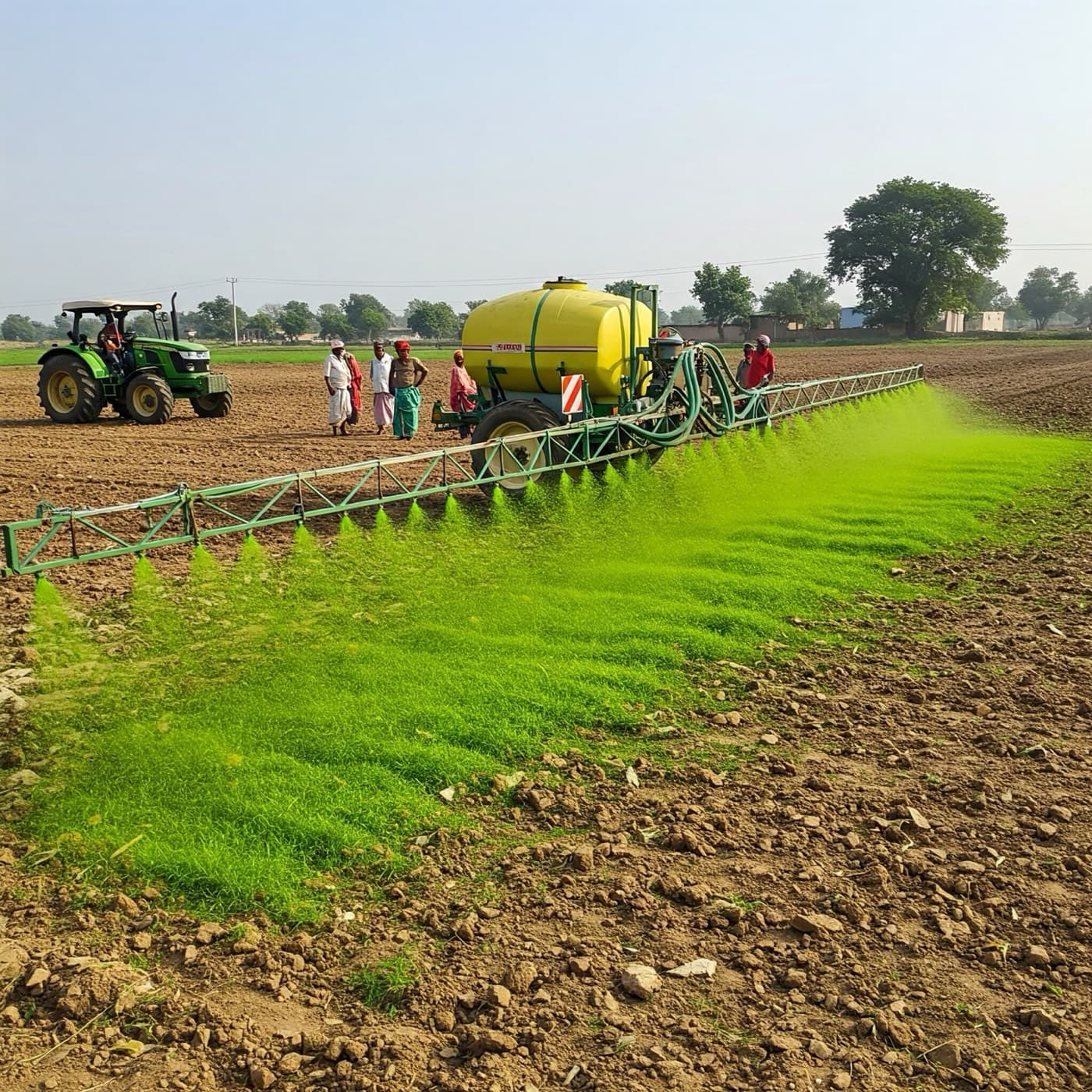
Yes, you can do it yourself, but only on a small scale. DIY hydroseeding with a home kit or a hose-end sprayer can patch a bare spot on a flat lawn. It struggles to cover a whole lawn evenly, because a garden hose cannot carry enough mulch or mix it well. For anything larger than a patch, a hydroseeding machine and a trained operator usually give a better lawn, and often at a lower cost per square foot.
What DIY hydroseeding kits actually do
A home hydroseeding kit is a small version of the real process. Most kits come in one of two forms.
- Hose-end sprayers. A bottle or canister clips onto a garden hose. It holds seed, a light paper mulch and some fertiliser. Water from the hose picks up the mix and sprays it onto the soil.
- Bucket or backpack kits. You stir seed, mulch and water in a bucket or a small tank. Then you pour, pump or spray it by hand.
Both put seed on the ground with some mulch around it. That is better than scattering dry seed, which birds eat and the sun dries out. But the mulch layer is thin, the mix changes as the canister empties, and there is rarely a binder to hold it in place.
What a real hydroseeding machine does
A professional hydroseeding machine has four main parts. Each one solves a problem that a hose-end kit cannot.
- Tank. The operator measures water, seed, mulch, fertiliser and tackifier into the tank for a known area. Every tank load covers the same ground at the same rate.
- Agitator. Paddles or jets keep the slurry moving. Seed and fibre stay evenly spread through the mix, so the first square metre gets the same blend as the last.
- Pump. The pump pushes a thick slurry at steady pressure. That pressure lets the machine carry a heavy fibre mulch, not just a light paper one.
- Hose or boom. A long hose reaches corners, slopes and areas a vehicle cannot reach. A boom mounted on the machine covers open ground quickly.
The result is an even green blanket of mulch with the seed held inside it. The colourant shows the operator where the slurry has gone, so gaps and overlaps are easy to see. Our guide on what hydroseeding is and how it works explains each stage.
Where DIY hydroseeding falls short
Most failed DIY lawns go wrong in one of five places.
Even coverage
A hose-end sprayer releases more mix at the start and less as it empties. Walking speed also changes the rate. The lawn comes up thick in some strips and bare in others. On a machine, the operator works from a measured tank and sprays in overlapping passes.
Mulch rate
The mulch does the hard work. It holds water, shades the seed and stops rain from splashing soil away. Home kits carry only a thin layer, so the soil surface dries out fast in Indian heat. A machine can lay a heavier fibre blanket that stays moist between waterings.
Tackifier
Tackifier is the binder that glues the mix to the soil. Without it, heavy rain or a hard spray from a hose can wash seed into low spots. This matters most on any slope, and in the monsoon.
Seed choice
Kits often come with one general seed. That seed may not suit your sun, shade, water or soil. Some popular lawn grasses are also grown mostly from runners or turf, not from seed. Our guide to grass types for India shows which grass suits which site.
Soil preparation
No spray can fix poor ground. The soil needs clearing, weeding, grading, levelling and loosening before seeding. Hard, compacted or rocky soil sheds water and seed. Many DIY jobs skip this step, and the grass fails even when the spray went on well.
A good test: if a heavy shower would make water run across your soil, a DIY kit is likely to lose seed. That ground needs proper preparation, a heavier mulch and a tackifier.
When do it yourself hydroseeding is reasonable
DIY is a fair choice in a few cases.
- Small bare patches. A worn spot by a path, a gap where a plant was removed, or a dog patch.
- Flat, sheltered ground. No slope, no strong runoff, and some shade from the harshest sun.
- Soil you have already prepared. Loosened, levelled and free of weeds.
- Time to water. You can water lightly and often, every day, until the grass is up. Most lawn grasses sprout within one to three weeks.
- The right season. Warm, moist weeks before or during the monsoon, or in spring. Peak summer dries a thin mulch too fast.
If your project fails most of these tests, a kit is likely to cost you seed, water and a season. Then you pay for the job again.
When a professional job costs less per square foot
A home kit looks cheap because each pack is small. But each pack covers only a small area, so the cost per square foot is high. Add the cost of re-seeding patches that fail, and the gap widens.
A professional job works the other way. Setup, travel and machine time are fixed costs. They are spread over the whole area, so the rate per square foot falls as the area grows. On a full home lawn, a housing society green or a farmhouse ground, a machine job usually costs less per square foot than kits. It also comes up evenly the first time.
There is a lower limit. On a very small patch far from the crew, travel and setup can outweigh the savings. For that size, a kit or a few turf rolls may make more sense. Our post on hydroseeding vs turf rolls compares the two. The page on what decides the cost of hydroseeding lists the other factors.
Looking for a hydroseeding machine? What to check
If you are a landscaper, a builder or an estate owner with a lot of ground, owning or renting a machine can make sense. Check these points before you choose one.
- Tank size. Match it to your usual job. A tank that is too small means constant refills. A tank that is too large is hard to move on small sites.
- Agitation type. Mechanical paddles handle heavy fibre mulch better. Jet agitation suits lighter mulches. Choose for the mulch you plan to use.
- Pump. It must move thick slurry without clogging. Ask what mulch it can handle and how far it can spray.
- Hose and boom. A long hose reaches slopes and back gardens. A boom is faster on open ground. Many jobs need both.
- Size and transport. Check that it fits through your site gates and onto the trailer or truck you have.
- Cleaning and parts. Slurry left in the tank sets hard. Look for easy access for washing, and spare parts and service you can get in India.
The machine is only half the job. The mix, the rate and the soil preparation decide the result. Urban Green runs its own machine, makes its own mulch and uses its own software to match seed and mulch to a soil sample. If you would rather hand the job over, send photos of the site and you get a written estimate, along with a frank view if turf suits a small patch better.
Questions people ask
Can I hydroseed my lawn myself?
You can patch a small bare spot with a hose-end kit. For a whole lawn, even coverage and the right mulch rate need a proper machine, so DIY results are often patchy.
Do hose-end hydroseeding sprayers work?
They work on small, flat, well-prepared patches with careful watering. They carry little mulch and usually no tackifier, so rain and sun can move or dry the seed.
Is it worth buying a hydroseeding machine for one lawn?
Rarely. A machine makes sense if you will use it again and again, for example as a landscaper or on a large estate. For one lawn, hiring a crew with a machine usually costs less.
What is the difference between a hydroseeding kit and a hydroseeding machine?
A kit mixes a small amount of seed and paper mulch into the flow from a garden hose. A machine has a tank, an agitator and a pump, and it sprays a measured, thick slurry of seed, fibre mulch, fertiliser and tackifier.